
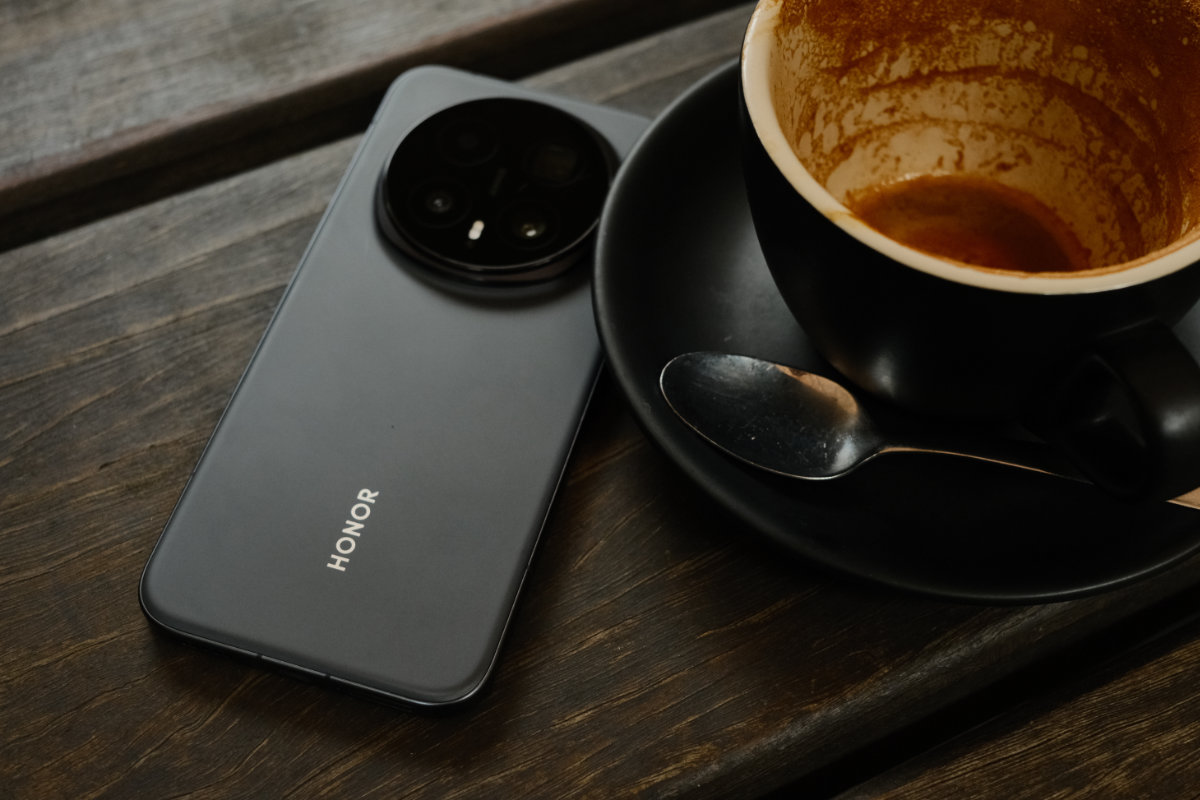
Honor’s newest flagship device for this year is the Magic 8 Pro, and it’s poised to present strong competition in the upper end of the market. With an exceptional camera array, long-lasting battery life, gorgeous display and class-leading performance, it’s a top-notch phone that works hard to earn its price tag.
It’s designed for power users who rely on their phone throughout the day, photography enthusiasts who don’t want to carry a second device, and anyone looking for an alternative to the big brands.
There are a few features that might give pause, but overall these are minor drawbacks that don’t detract from a strong recommendation.
Overall Rating: 4.5 / 5
Pros
- Exceptional hardware specs; camera, chipset, battery
- Some of the best speakers I’ve heard on a smartphone
- Impressive screen; bright and vivid
Cons
- MagicOS can be a bit rough around the edges on first setup
- Plastic rear material raises eyebrows at this price point
Price: $1999 RRP | For users seeking a premium experience from every angle

Setup & First Impressions
On unboxing the Honor Magic 8 Pro, it’s immediately apparent that this is a premium phone. The aluminium frame adds some polish while the large camera bump sends a message that this is a phone for photography on the go.
The plastic rear may raise an eyebrow at first, but it’s a glass-fibre reinforced material that’s arguably more durable than glass or metal backs found on other high-end devices. It resists fingerprints fairly well and feels smooth, but some users may prefer glass or metal.
Setup is typical of any Android 16 smartphone; just follow the prompts to sign into your accounts and set up the phone as you like it. I didn’t encounter any unexpected sticking points.
Design & Aesthetics
The Honor Magic 8 Pro comes in at 219 grams, which is fairly reasonable given the large 7100mAh silicon-carbon battery. It feels sturdy and rigid, and while the back might be a plastic polymer, it feels anything but cheap.
The screen is a NanoCrystal Shield unit with real durability credentials. Honor says it is up to 10 times more drop resistant than standard phone glass, and SGS has given it a five-star drop resistance rating.
The camera island on the rear is quite large as with other Honor phones we’ve reviewed on the site. It houses all the camera sensors and provides a design element with a knurled edge, but means the phone cannot sit flat whilst facing screen-up.
On the right side of the device you’ll find the usual buttons as well as an additional AI Button that can be assigned to different functions for a short press, double press, and long press. I like to use this button to quickly open the camera, but other helpful settings include opening Google Lens for quick translation and search, or AI features.
It also works as a shutter button in the camera mode, but it’s not in the ideal place for one-handed photography.
The Honor Magic 8 Pro features IP68, IP69, and IP69K ratings that provide resistance against high-pressure water jets and dust intrusion. This is an above-average rating that until recently was reserved for ruggedised phones, so it’s interesting to see on a flagship-style device.
Honor offers this phone in Black, Sky Cyan, and Sunrise Gold colourways. If I had to pick a favourite, it would be the Sky Cyan, as it’s the most unique option in the lineup.

Life With the Honor Magic 8 Pro
I’ve been using the Magic 8 Pro as a daily driver, trying out its cameras for everday shooting and artistic style shots, and testing out the performance in intensive 3D gaming loads as well as regular usage.
Positives
The hardware itself is the biggest upside on this device. It offers excellent battery life that comfortably lasts up to two days of regular usage, though with intensive tasks you can expect a bit lower from hardware that’s this powerful.
Honor has opted for the extremely fast Snapdragon 8 Elite Gen 5 chipset in this phone. With single-core clock speed reaching 4.6GHz, it makes this phone one of the fastest we’ve ever tested on the website.
The display provides excellent brightness for outdoor usage and produces lifelike colours for an immersive viewing experience.
Honor hasn’t skimped on the audio side of the audiovisual experience either. This phone features some of the best speakers I’ve heard in a smartphone. They deliver good bass response, and while it leans more towards the treble side as the volume goes up, at moderate volumes you may find yourself skipping the Bluetooth speaker entirely.
Negatives
MagicOS prompts quite often to obtain permissions for using just about every basic feature of the device. Even when searching your own app drawer, it asks for internet access to send your search keywords out. This can get pretty fatiguing and lets down an otherwise solid Android experience.
Honor’s AI features are useful in some areas, but others are of dubious value, like the over-aggressive photo processing that smooths out texture and detail in otherwise acceptable photos.
Camera
The camera suite is one of the highlights of the entire phone, and it provides a great experience in everyday usage. In good lighting conditions, the camera offers exceptional detail with impressive highlight and shadow detail.
In low light, AI brightening features work very well without too much loss of detail. However, the camera is quick to slow down the shutter speed to achieve a brighter result, which can introduce blur if your hands are less than steady.
I had no issues capturing indoor shots under artificial lighting, though the white balance is prone to shifting a little bit between shots, which can make them look inconsistent from snap to snap.
Honor has furnished the phone with excellent video specifications, including 4K 120 fps recording with HDR Vivid dynamic range. There’s also controls for white balance lock for enthusiast-level videography; the only features missing are HLG or LOG compatibility.
The front-facing camera offers good detail for video calls, but it’s worth noting that it defaults to a beauty mode that smooths skin texture and makes your nose and forehead look smaller.
The phone features a 50-megapixel main lens with optical image stabilisation, a 200-megapixel periscope telephoto lens with 3.6x optical zoom and image stabilisation, and a 50-megapixel ultrawide lens with close macro focus.
All three lenses provide great quality, and it’s hard to decide whether the main lens or the telephoto is the headline feature.


Performance & Reliability
The Snapdragon 8 Elite Gen 5 managed to max out the 3DMark Wild Life benchmark, and achieved an average of 45 fps in Wild Life Extreme; a 4K gaming test. This is seriously impressive performance from a mobile phone.
Throughout an extended stress test I noticed minimal thermal throttling, suggesting the phone can achieve this performance for an extended time without issues. That makes it a top choice for the most demanding mobile gaming titles.
However, when running at full speed for a longer period the phone does become a little hot to the touch.
It goes without saying that day-to-day performance is a walk in the park for this phone. There’s no lag while switching between multitasking apps.
Practical Considerations
Honor does not include a charger in the box for this phone. It’s rated for wired charging up to 100 watts, or wireless charging up to 80 watts with Honor’s proprietary wireless charger. Standard Qi charging will work, but at a slower rate.
Honor’s support tail is under a bit of contention. The brand confirmed in March of last year that its Magic series devices will receive seven years of security updates, but there is some conflicting information surrounding whether this applies globally or just in the European Union.
The phone features a helpful IR blaster that’s great for remote control in a pinch; it’s an oft-forgotten feature that comes in clutch when you need it.

Value & Alternatives
There’s a wide range of alternatives worth looking at around this price point. It’s been a banner year for new flagships already.
The Motorola Signature we covered in April comes in with the same chipset tier, but at a lower price point. It’s a thinner phone overall, so you may not achieve the same battery life out of it, but it represents excellent value.
The Oppo Find X9 we reviewed in March is another natural alternative with a strong focus on the photography experience. It utilises a different processor, but still puts up strong performance metrics in demanding apps. The Oppo comes in a little bit more expensive.
The Honor Magic 8 Pro join these alternatives as a natural recommendation if you’re looking to step away from big brands without sacrificing any performance.
Would I Buy It With My Own Money?
Yes. The Honor Magic 8 Pro is an excellent flagship device that doesn’t really leave anything to be desired. The minor drawbacks like the operating system issues will work themselves out over time, and don’t detract from a strong recommendation if you’re looking for extreme performance.




1 comment
ABDUL REHMAN
A nice mobile phone in the World 🌎🌍