
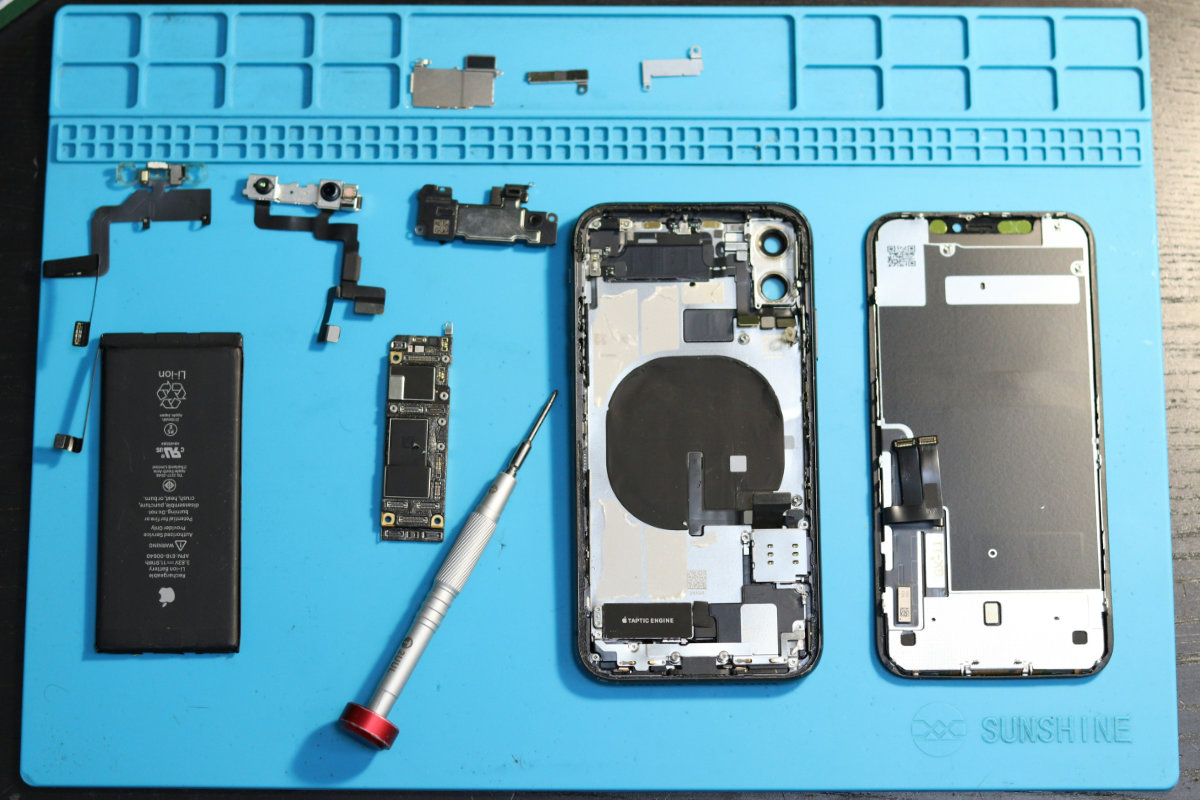
The European Union will introduce right to repair laws that require phones to have user-replaceable batteries from February 2027.
This is the next step in the EU’s multi-year campaign aimed at combating planned obsolescence and other user-unfriendly practices by tech manufacturers.
What the new rule means
The new removable battery law was originally approved in 2023 to come in force from February 2027. The law requires “batteries in portable devices to be removable and replaceable without specialised tools or assistance”.
Replacement batteries for devices on the market must remain available for at least five years after the last unit is placed on the market.
In a practical sense, that means that once the manufacturer sells the last phone to a retailer, spare batteries must be available for five years from then on.
In manufacturing, heat-activated adhesives – the current method most phones use to seal the device – are prohibited under the new rules.
It’s not a full return to pop-off backs like we had in the 2000’s – manufacturers can still require tools to remove the back, but only commercially available ones.
On the repair side, specialised methods and materials like heat guns, solvents, and proprietary tools are explicitly disallowed.
Right to Repair
The European Union has already changed phone design for the better in some regards. USB-C is a requirement across the industry, spare parts must be available for at least seven years, and software updates must be provided for at least five years.
Alongside a separate Right to Repair Directive, the European Union has been pushing for more sustainable technology and standardised components across the market.
These laws are designed to improve how smartphones and other devices are designed, sold, and supported after purchase.
Apple and Samsung’s practice of parts-pairing, locking software to specific hardware parts and disabling third-party components, is explicitly disallowed under the new framework.
The new rules support the broader Right to Repair movement that aims to keep existing devices running rather than sending them to recycling or landfill.
What this means for Australians
While European Union laws don’t directly affect us here in Australia, their regulations often have a knock-on effect.
Manufacturers tend to avoid creating separate hardware designs for markets due to cost and logistical complexity, so EU-compliant models often spread globally as we’ve seen with the USB-C change.
Although we don’t have equivalent laws, it seems likely that the EU’s new laws will make a difference to phones you and I can buy locally.
Our laws are fairly soft on manufacturers. Apple once received a judgement by the ACCC for voiding warranties on third-party repairs, but this is a reactive action and not a proactive law.
Unfortunately for now, any benefit we’ll get from the EU’s new laws is only by accident.
If you’re dealing with short battery life but can’t replace it, check our article for a few ideas to help mitigate the issue.





2 comments
STEVE HOBSON
Great move should more of it across all merchandise that is safe for everyone to replace batteries do minor repairs that don’t affect the operation of the device
Scott Hunt
Agreed!