

The ASUS Zenbook A16 is a premium ARM-based laptop designed to tackle today’s modern workloads.
Equipped with the premium Snapdragon X2 Elite chipset and a gorgeous 3K OLED display in a lightweight package, the Zenbook A16 fills a gap in the market for high portability with excellent visuals and performance.
That mix of features comes with a hefty price tag, though, and it’s not easy to justify.
Overall Rating: 4 / 5
Pros
- 3K OLED display is very impressive
- Surprisingly lightweight for this screen size
- Strong performance from the chipset with good thermal handling
Cons
- Glossy display is a usability issue near windows or outdoors
- Trackpad is prone to ghost inputs
- Battery life falls short of marketing claims
Price: $4299 | A premium laptop well suited for modern workloads
Setup & First Impressions
The Asus Zenbook A16 impresses on its initial unboxing. It’s an ultra-thin machine made of a material Asus calls “Ceraluminum”. It’s a high-tech ceramic that provides a textured surface on the lid, frame, and base.
Setup is typical of today’s Windows machines. Following the prompts the machine undergoes updates and sets your customisations. Just log in with your Microsoft account and it automatically pulls across settings from a previous machine.
The build quality feels very premium. Some bigger laptops feel like they flex a bit when you hold them from the corner, but the Zenbook A16 feels solid.

Design & Aesthetics
This is an attractive machine finished in Asus’ colour Zabriskie Beige – not the beige you may remember from PCs of the 1990s.
It has minimal branding. “Asus Zenbook” is written on the rear in a reflective silver and there’s a small arrow motif on the upper right of the keyboard.
The keyboard features full-size keys and the trackpad is massive, making work quite comfortable. The screen has a minimal bezel that ensures minimal distraction from the work at hand.
Life With the ASUS Zenbook A16
I’ve been working with the Zenbook A16 as a main laptop for two weeks and I’ve gotten to know its highlights, quirks, and caveats.
Positives
The screen is the lynchpin of this whole machine. It’s a high-refresh rate 3K OLED that makes watching your favourite content a delight. It gets bright enough to compete with indoor lighting and comes with an inbuilt colour profile for realistic, vivid colours.
Portability is a highlight. 16-inch laptops aren’t the most portable form factor, but for the screen size the Zenbook A16 is easy to carry and work with.
Thermal performance is impressive. The Zenbook A16 is very capable, but through normal usage the fans almost never kick on and the laptop stays cool and quiet. Even under load, the fans are quiet and the laptop stays cool under the wrist.
Negatives
The biggest highlight of this machine is the screen, but so is the biggest negative. That gorgeous display is let down by the glossy finish that’s very prone to reflections. It makes the screen almost unusable in sunlight or next to a window.
A big issue in usage I’ve noticed is the trackpad palm rejection. I’ve experienced ghost inputs almost every time I use the machine, and left clicks are often coming out as right clicks instead.
Battery life has been pretty good, but it doesn’t meet the marketing claims. I got about 8 hours of screen time streaming YouTube before hitting a low battery warning at 30 percent, which calls the marketing into question.
Performance & Reliability
The Snapdragon X2 Elite provides excellent performance and very efficient power usage. It can shift between efficient power sipping with minimal fan usage during normal tasks, or high performance output with surprising metrics.
In synthetic benchmarks, the Snapdragon X2 Elite performs extremely well. It exceeded my expectations in 3DMark benchmarks and in an actual gaming test I noticed no unexpected slowdown.
Under a sustained intensive load the fans kicked on a few minutes into the test, and even at full speed they’re not annoyingly loud. I noticed some minor throttling, but nothing out of the ordinary.
Once the test stopped, it only took a few minutes to cool back down to normal, meaning the cooling solution easily keeps up with the Snapdragon X2 Elite.
That means it’s flexible enough to do tasks like gaming, content creation, and intensive editing with high performance mode, but shifts to a silent and cool machine when you’re doing simpler tasks.
Practical Considerations
Coming in at the 1.2 kilogram mark with a slim profile, the Zenbook A16 is easy to slip into a bag and carry. It’s the blend of the ARM processor and lightweight chassis that allows this machine to stay slim, portable, and powerful.
The Zenbook A16 supports up to 130-watt fast charging for truly rapid top-ups, and it charged at a good pace from my normal phone charger as well. The USB-C PD flexibility comes in useful.
The ARM-based computer argument only comes into question if you’re using specialised software like legacy utilities or enterprise apps. Most regular users won’t run into an issue, but if you’re intending to use the laptop for specialised tasks you may want to look into whether your software is compatible.
For more information about ARM and x86 laptops, check out our article.
The poor reflection handling on the screen means this isn’t a great laptop to use outside in sunlight. The screen is visible, but the glossy screen makes it very difficult to concentrate on your tasks.
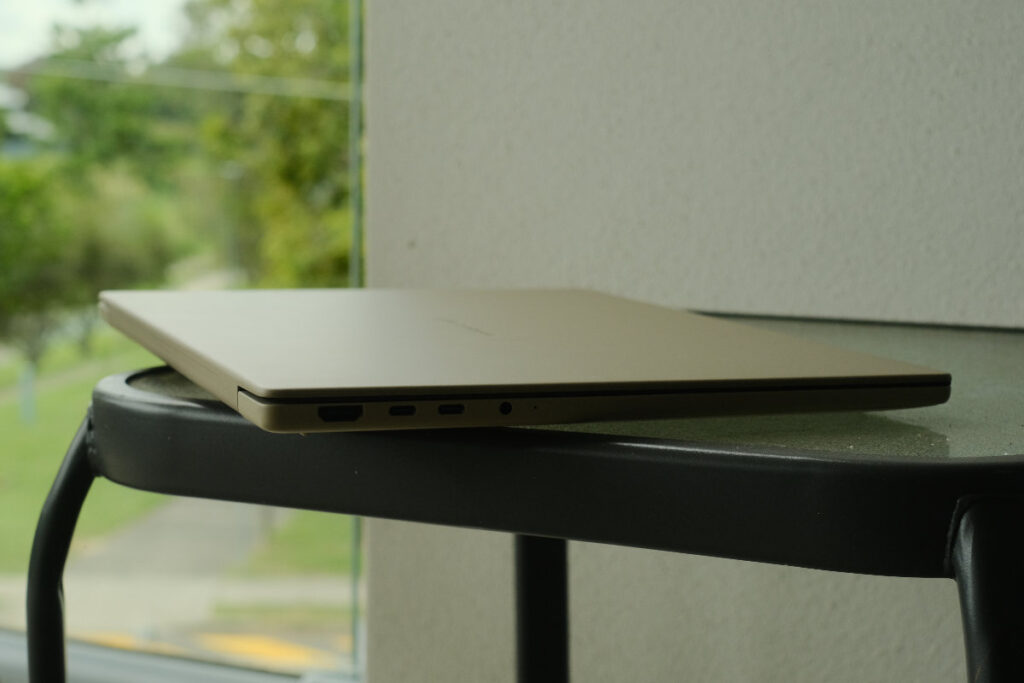
Asus’ port selection includes two USB-C ports and a full-size HDMI port on the left side, and a USB-A port and card slot on the right. That’s fewer than I’d like, but probably enough for most people to get by – and the HDMI port is a welcome inclusion.

Value & Alternatives
The Asus Zenbook A16 in this configuration isn’t great value. At $4299 it’s firmly in luxury territory. However, its blend of performance hardware in a lightweight chassis and a top-notch screen is quite unique.
Alternatives for buyers who value the portability and processing power would be the MacBook Air 15 at $2199 or the MacBook Pro 16 at the same price. Both of these options do sacrifice the screen quality that the Zenbook A16 offers.
Would I Buy It With My Own Money?
If you’re the type of person who won’t compromise on screen quality, needs a high level of portability and performance in a 16-inch form factor, and can stomach the price, then yes, the Zenbook A16 is a top choice. There’s nothing else on the market that excels at all three of these points.




Comments