
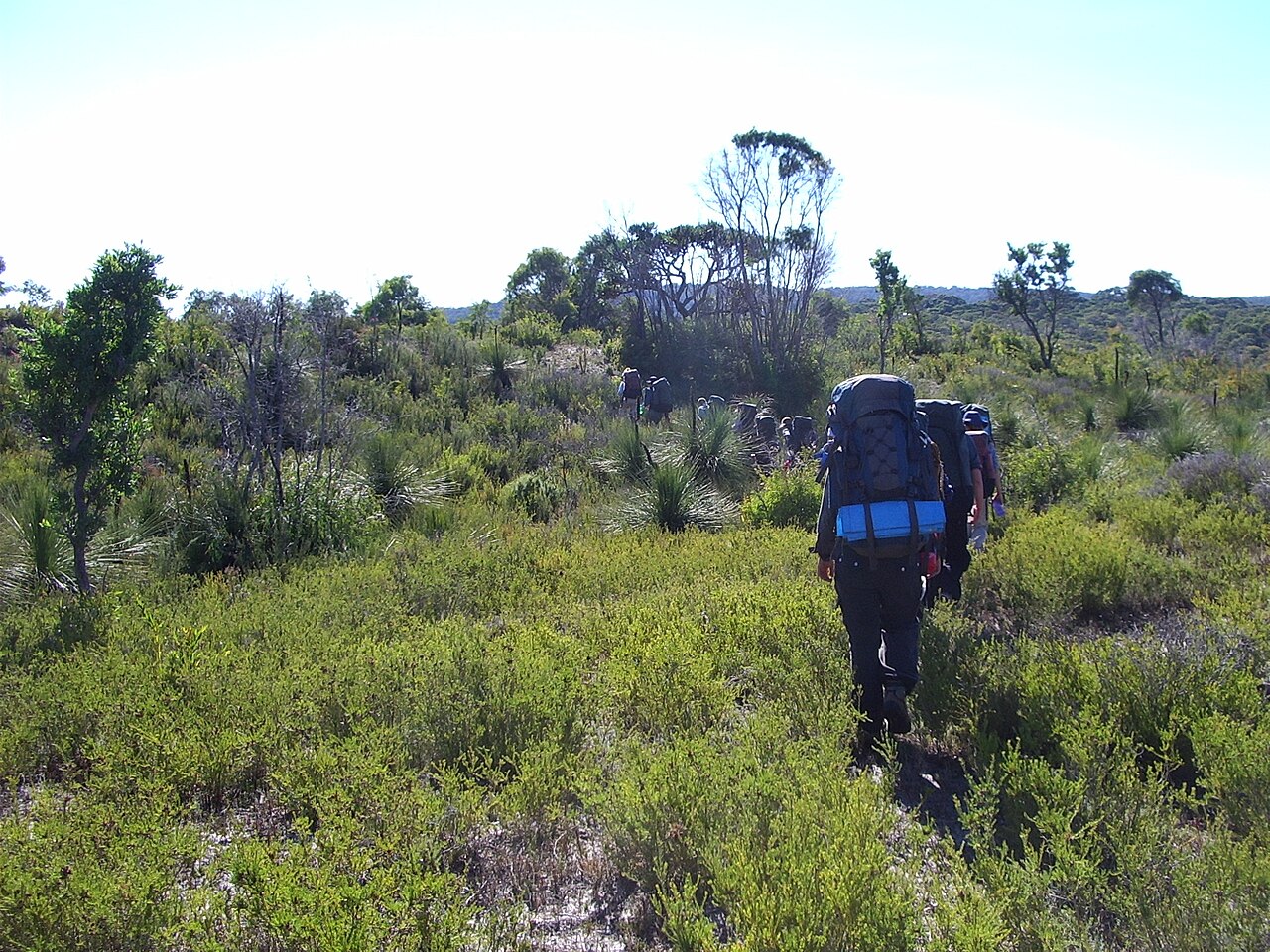
Whether you’re camping, hiking, or bikepacking, technology can make adventures easier and safer.
We’ve put together a short list of devices to consider for your next journey off-grid.
A navigation device with offline maps
Knowing your way around is important when going off grid, so bringing a device that lets you browse the map, follow your route, and navigate is crucial.
Depending on the type of adventure you’re on, this could be your normal smartphone or a dedicated device. Smartphones offer all the functionality you need, but navigation-specific devices generally offer better battery efficiency and potentially better signal strength.
For hiking, a handheld device is light and pocketable, for bikepacking a cycling computer is ideal for wayfinding, and for 4WD adventures, in-car GPS models offer bigger screens and charge from the car.
The main thing to remember is to download maps for the area you’ll be traveling through so you have them available where there’s no cellular signal.
A high-capacity power bank
Power banks are essential for charging devices while you’re away from electricity grids. Taking a high-capacity model of 20,000 mAh or more means you can recharge devices multiple times, giving you extra overhead for your adventures.
These devices can be heavy, so consider the amount of time you’ll be carrying it and the likely capacity you’ll need. One or two extra charges is fine for an overnight trek, but for multi-day trips you’ll want a larger capacity model.
Water resistance and durability are also points to consider.
If you plan to take your battery bank on a plane, keep in mind the additional rules your airline may have, as there are increasing restrictions surrounding power banks on aircraft.
A portable solar panel
Recharging your devices with a power bank is great – but how do you recharge the power bank?
If you’re on a longer trip with extended periods between electricity access, a portable solar panel can be a great asset. Just set it up and it can passively top up your power bank during your rest stops.
Things to consider are wattage, durability, and portability. You’ll also want to make sure it has the right connector for your power bank or power station.
A rechargeable headlamp or torch
Lights are necessary for seeing in the dark, but they can also be used for signaling in a pinch. Even if you’re only on a day trip, a torch can be a valuable asset.
Make sure to get one that’s rechargeable with your power bank so you have even longer total usage time.
For longer adventures: A personal locator beacon
PLBs are the ultimate safety net. They’re expensive, and you’ll hopefully not have to use one, but for remote adventure locations they’re a must-have.
Locator beacons allow you to signal for emergency help via satellite. They’re small, easy to carry, and can be a literal lifesaver in a touch situation.
When activated, they transmit your location to emergency services who can trace your location to within about 100 metres.
Some PLB models even combine a few crucial features – they allow two-way communication, navigation, and emergency contact all from one device.







Comments