
As we rely on our portable devices for more and more tasks from communication with friends to paying for items to displaying identity documents, running out of battery is becoming a bigger inconvenience than ever.
That’s where a power bank can be a big help. These rechargeable, portable batteries help to keep your devices topped up, whether it’s a smartphone, headphones, or laptop.
If you’ve ever found yourself away from a charger with a low battery notification on your phone at mid afternoon, you already know how useful a portable power bank could be.
How much power bank capacity do you need?
One of the key differences between power banks is the physical size and capacity. As these batteries get more power capacity, they also get physically larger.
Milliamp hours is the measure of electrical charge a battery can store and deliver over time. Higher numbers mean a longer battery life for smartphones and laptops, and for power banks it’s fairly comparable.
Most power banks operate at about 80 to 90 percent efficiency and due to storage and charging voltage differences, the practical usage numbers can vary.
Efficiency loss in the process of charging means that if you have a phone with a 5000 mAh battery, a power bank with 10,000 mAh capacity might charge it a bit under one and a half times to full.
That’s why you might want to pick a power bank with a bit more capacity than your phone. Aiming for twice your device’s battery capacity should give you a good buffer.
What size power bank should you choose?
Pocket and Portable Power Banks
Pocket power banks are small enough that they’re super easy to take with you, but can still give you a quick top up to help your phone get through the day.
Pocket power banks typically range around 5000 to 10,000 mAh in capacity. Many are about the size of a credit card but thicker, some come with a keychain loop or lanyard, or even include their own cable so you don’t have to bring another with you.
These units are great for daily commuters, minimalist kits, or overnight bags.
Standard Power Banks
Power banks between 10,000 and 15,000 mAh are great as an everyday device that you could toss in your satchel or backpack and not think about throughout the week.
These are great to have when you need them, and the increased capacity lets you get more recharges before you have to top up the power bank itself.
If you’re comfortable with a slight weight increase, these are a bit more flexible in daily usage than the pocket sized models.
High Capacity Travel Power Banks
Power banks from 15,000 to 20,000 mAh and up are mainly designed for extended times away from a charger. These can be great for travel and camping, or for when you need to charge larger devices like tablets or laptops.
It’s worth noting that Australian airlines limit the maximum capacity you can carry on, usually to around 27,000 mAh (the official measurement is 160 watt-hours) per power bank and a maximum of two power banks per passenger.
If you’re travelling, camping, or have multiple devices to charge up, a large capacity power bank might be the best option for you.

What power bank features should you look for?
There are a few key feature differences between different power banks – it’s not just capacity that makes the difference here.
Output Power (Watts)
While milliamp-hours is the measurement of capacity, wattage is what determines your charging speed.
The standard 5-watt USB standard is slow by today’s standards. USB-C PD ports support up to and above 100-watt charging speeds.
If you’re looking for fast charging capability, try looking for a power bank around or above 30-watts. 65-watts is quite comfortable for really fast top ups.
Higher wattage is usually a feature of physically larger power banks, but even pocket ones are reaching 45 watts these days.
Bi-directional charging
Bi-directional USB-C ports on the charger mean you can charge to and from the power bank with the same port.
This gives you more versatility and simplifies charging. You can take the same USB-C cable you use to recharge the power bank and use it to charge up your phone.
Some devices that feature bi-directional charging also allow pass-through charging where you can charge the phone and power bank at the same time with a second cable.
Wireless charging
Some models support wireless charging with Qi, Qi2 or MagSafe. This is really convenient, as you don’t even need a cable to top up your phone.
MagSafe compatible models allow you to bring the power bank attached to your phone as a permanent battery extension.
It’s worth noting that wireless charging is much less efficient than cable charging, so it further reduces your total capacity – but for convenience, wireless charging is hard to beat.
Build quality and trusted brands
It’s important to buy power banks from reputable companies, as poorly-made power banks can be a huge safety risk. Australian fire services respond to around one fire a day caused by lithium batteries – so ensuring your unit is trustworthy is paramount.
Cheap, unbranded units have worse (or absent) safety circuitry that makes them more prone to thermal runaway which can quite literally cause them to explode.
That’s why it’s important to stick to trusted brands that adhere to rigid quality standards.

Power Bank Air Travel and Safety Compliance
Towards the end of last year, Australian airlines and CASA introduced new regulations regarding power banks. It’s important to keep these regulations in mind if you’re planning to fly with your power bank.
Flight Regulations
CASA regulations require power banks to be carried in carry-on luggage only – not checked baggage.
Watt hour limits are up to 100 watt-hours (roughly 27,000 mAh), or up to 160 watt-hours with explicit airline approval. Qantas group airlines usually approve banks up to 160 watt-hours, but Virgin usually sticks to the 100 watt-hour limit. For practical advice, stick to 27,000 mAh if you don’t want the hassle.
China Compulsory Certification (CCC)
CCC is China’s mandatory product safety mark, administered by the Certification and Accreditation Administration of China.
Because most of the power banks sold in Australia and New Zealand are manufactured in China, CCC compliance signals that the device at least passes the baseline electrical safety tests in the country of origin.
The certification covers electrical safety, electromagnetic compatibility standards, and battery cell quality standards.
Australian Safety Standards
Australian regulatory bodies administer standards that cover power banks. Look for the regulatory compliance mark – Australia and New Zealand’s unified mark that covers electrical safety and electromagnetic compliance.
The mark looks like a triangle with a check mark inside.
The CE mark is a European Economic Area marking that might give further assurance of a quality product. It means the device complies with European health, safety, and environmental protection standards.
Opinion: What power bank do I use regularly?
I keep two power banks around based on my needs. While working at home I’m always near a charger, but when out and about I find the extra battery power really useful.
If I’m going out with a lightweight kit for photography or gadget testing, I’ll bring along a small power bank like the D-Link DPP-101. It fits easily in my cross-body bag and doesn’t weigh a ton so I don’t even really notice I’m packing the extra gear.
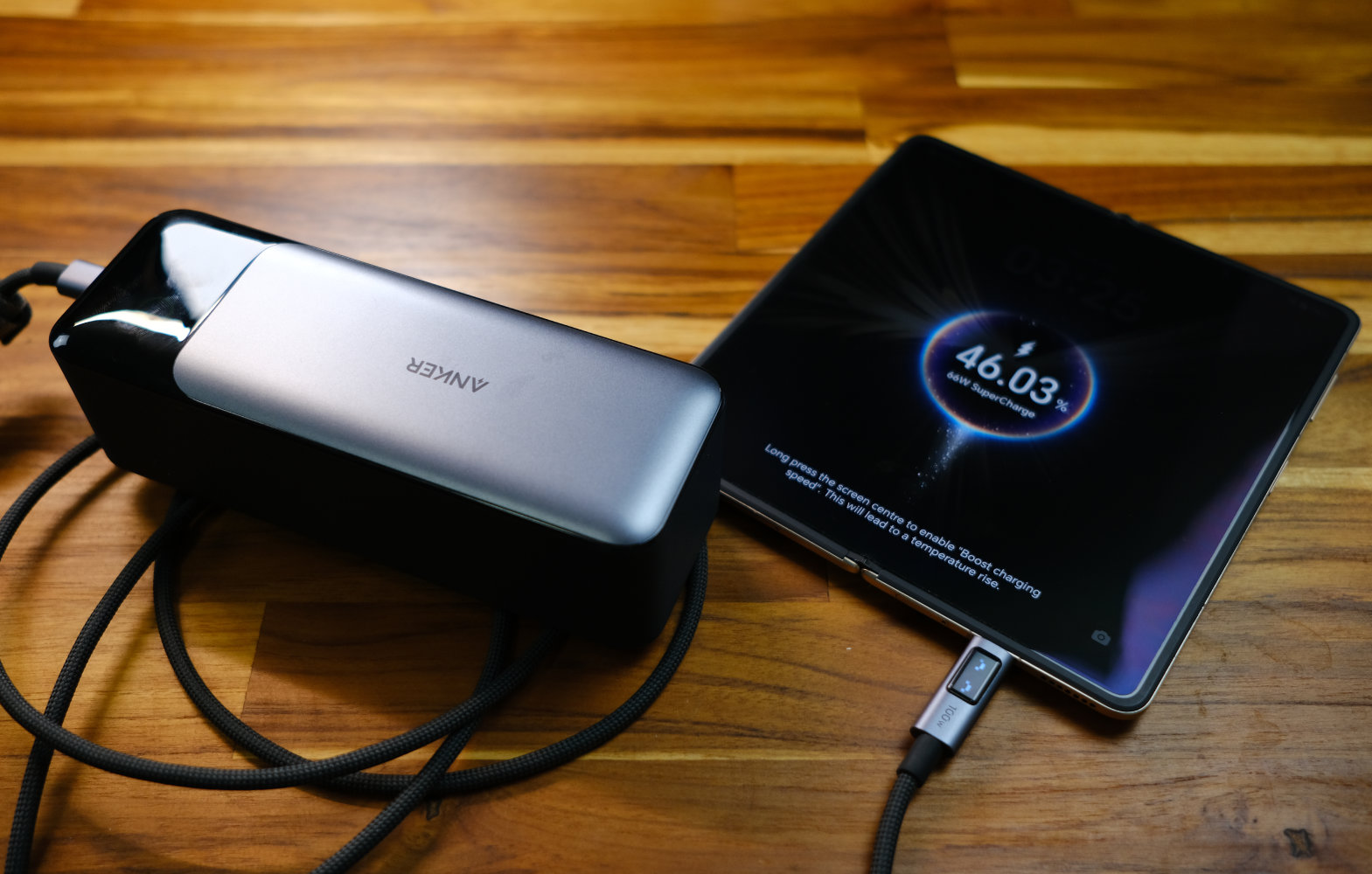
For working in the city with my full portable kit, which includes my camera, laptop, and often multiple phones, I’ll bring my trusty Anker 737 Power Bank. It’s got a huge capacity that can keep all my devices topped up and the high output wattage means my devices recharge quickly.





Comments